In the world of manufacturing, particularly in aerospace, medical devices, and automotive industries, titanium is revered for its strength, light weight, and resistance to corrosion. The implementation of advanced technologies like robotic laser welding machines has revolutionized the way titanium is fabricated. This article delves into the advantages and applications of a 3000W robotic laser welding machine specifically designed for working with titanium.
Introduction to Robotic Laser Welding
Robotic laser welding combines the precision of robotics with the power of laser technology to produce high-quality welds. The 3000W robotic laser welding machine is particularly suited for titanium, a metal that presents unique challenges due to its thermal and chemical properties. The ability to control heat input accurately allows for minimal distortion and enhanced strength in the welded joints.
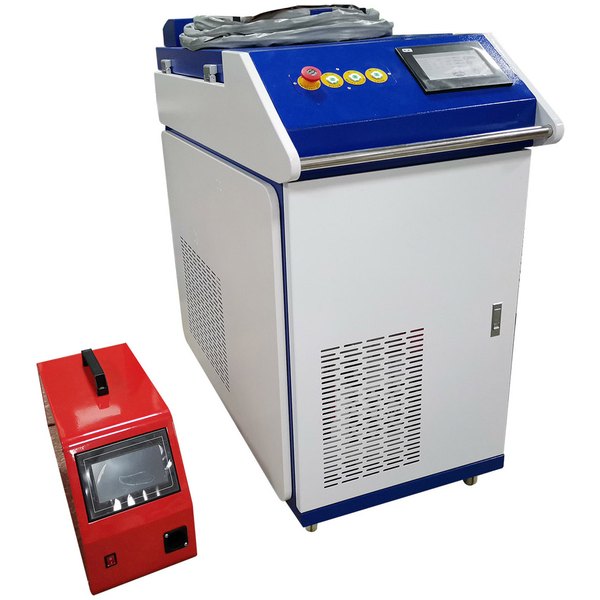
Advantages of Using a Robotic Laser Welding Machine
The 3000W robotic laser welding machine offers several advantages:
1. **High Precision**: The use of laser technology enables precise control over the welding process, resulting in clean and accurate welds. This precision is crucial when working with titanium, where any imperfections can lead to structural weaknesses.
2. **Reduced Heat Affected Zone (HAZ)**: Traditional welding methods can create large heat-affected zones, leading to potential weakening of the material. Laser welding minimizes HAZ, preserving the mechanical properties of titanium.
3. **Speed and Efficiency**: Robotic systems can execute welding tasks much faster than manual processes. The 3000W machine can complete complex welds in much shorter timeframes, which enhances production efficiency.
4. **Versatility**: This machine can be programmed for various welding applications, making it suitable for different titanium components in industries ranging from aerospace to biomedical engineering.
Applications in Different Industries
The versatility and precision of the 3000W robotic laser welding machine make it applicable in numerous industries:
– **Aerospace**: Titanium is widely used in aerospace components due to its high strength-to-weight ratio. The robotic laser welding machine is ideal for creating intricate engine parts and structural components.
– **Medical Devices**: In the medical field, titanium is favored for implants and surgical instruments. The precision welding ensures that the instruments maintain their integrity and biocompatibility.
– **Automotive**: With the rise of electric vehicles and the need for lightweight components, titanium’s application in the automotive industry is growing. Laser welding provides strong, lightweight joints necessary for enhanced performance.
Future Trends in Robotic Laser Welding
As technology advances, the future of robotic laser welding appears promising. The integration of artificial intelligence and machine learning may enhance the adaptability and efficiency of robotic systems. Additionally, innovations in laser technologies could further improve welding processes and expand their capabilities with other high-performance materials.
Conclusion
The 3000W robotic laser welding machine stands at the forefront of modern fabrication technology, particularly for titanium. Its ability to deliver precise, efficient, and high-quality welds makes it an invaluable asset across various industries. As the demand for titanium components continues to grow, so will the importance of advanced welding technologies in ensuring the integrity and performance of these materials.