Handheld laser welding machines have revolutionized the way we approach welding tasks, particularly in the realm of lightweight and high-strength materials like aluminum alloys. This article delves into the effectiveness of these devices in welding aluminum, a commonly used material in various industries due to its favorable properties.
Introduction to Handheld Laser Welding
Handheld laser welding machines leverage high-intensity laser beams to join materials, offering a portable and efficient solution to traditional welding methods. The precision and speed of laser welding make it ideal for intricate and delicate projects. But can these machines handle the challenges presented by aluminum alloys?
The Challenges of Welding Aluminum Alloys
Aluminum alloys are known for their lightweight, corrosion resistance, and excellent thermal conductivity. However, these same properties can pose challenges during the welding process. Aluminum has a low melting point and a high thermal conductivity, which can lead to warping and distortion if not managed properly. A handheld laser welding machine must be equipped to handle these factors to ensure quality welds.
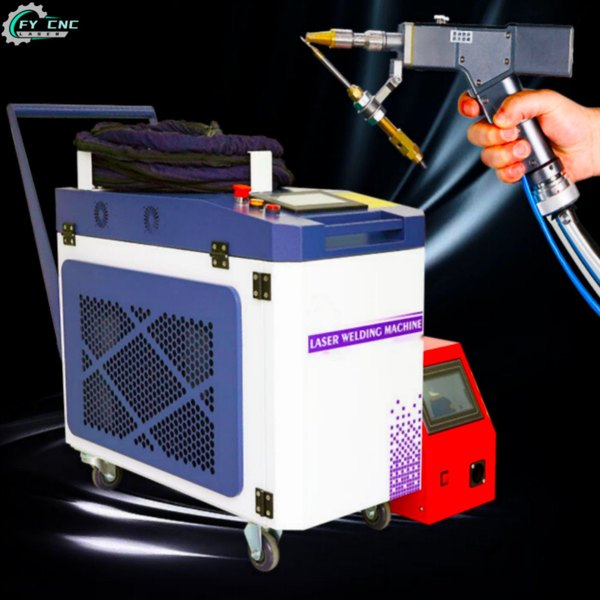
Advantages of Using Handheld Laser Welders
Handheld laser welding machines offer several advantages when working with aluminum alloys:
1. **Precision**: The focused laser beam allows for accurate control over the welding process.
2. **Speed**: Laser welding is faster than traditional welding techniques, reducing production times.
3. **Less Heat Affected Zone (HAZ)**: Due to the concentrated energy input, there is less heat transfer to the surrounding areas, minimizing distortion.
4. **Portability**: The handheld design enables ease of use in various environments, from workshops to on-site applications.
Industrial Applications
Industries ranging from automotive to aerospace are increasingly adopting handheld laser welding machines for aluminum welding tasks. The ability to efficiently weld complex geometries makes these devices invaluable for producing lightweight components that enhance fuel efficiency and performance. Moreover, handheld lasers can be utilized in repair works, allowing for quick and effective fixes without the need for extensive disassembly.
Conclusion
In conclusion, handheld laser welding machines are capable of effectively welding aluminum alloys when appropriately utilized. While they offer several benefits, operators must be aware of the specific challenges presented by aluminum. With the right techniques and equipment, these machines can achieve high-quality welds that meet the demands of modern industries. As technology advances, we can expect further improvements in the capabilities and applications of handheld laser welding equipment.