In the world of welding technology, fiber laser welding machines have gained popularity due to their precision and efficiency. This article explores the capabilities of a 1500W fiber mold laser welding machine specifically concerning its ability to weld brass.
Understanding Fiber Laser Welding
Fiber laser welding utilizes a concentrated beam of light to melt and fuse metals together. The 1500W output is suitable for various materials, including steel, aluminum, and some alloys. However, knowing whether it can effectively work on brass requires an understanding of both the machine’s capabilities and the properties of brass itself.
The Properties of Brass
Brass is an alloy of copper and zinc, known for its excellent corrosion resistance, conductivity, and machinability. Its melting point falls between 900°C to 940°C (1652°F to 1724°F), which is manageable for welding processes. However, brass also tends to have higher thermal conductivity compared to other metals, which can affect the welding process due to heat dissipation.
Laser Welding Parameters for Brass
When using a fiber mold laser machine, several parameters must be optimized for successful brass welding. This includes adjusting the focus of the laser beam, the speed of welding, and the power settings. A 1500W machine generally provides enough power to weld brass, but achieving a quality joint requires careful tuning of these parameters.
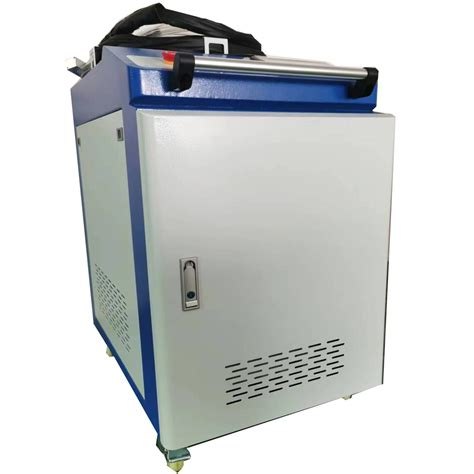
Advantages of Using a Fiber Laser Machine for Brass
The fiber laser welding process offers several advantages when working with brass. Firstly, it provides a high degree of precision, reducing the heat-affected zone (HAZ) and minimizing distortion, which is crucial for maintaining the integrity of brass components. Secondly, the ability to automate the process enhances repeatability and can increase production efficiency.
Challenges of Welding Brass with Fiber Lasers
Despite the advantages, there are challenges associated with welding brass with a fiber laser welding machine. One common issue is the formation of zinc vapor during the welding process, which can lead to porosity and weaken the weld. Additionally, controlling the energy input is critical, as excessive heat can lead to burn-through and loss of material.
Conclusion
In summary, a 1500W fiber mold laser welding machine can indeed weld brass, provided that the correct parameters are established and the challenges are managed effectively. With its precision and efficiency, fiber laser technology presents an excellent option for welding brass components in various applications. As with any welding process, thorough testing and parameter optimization are essential for achieving the best results.